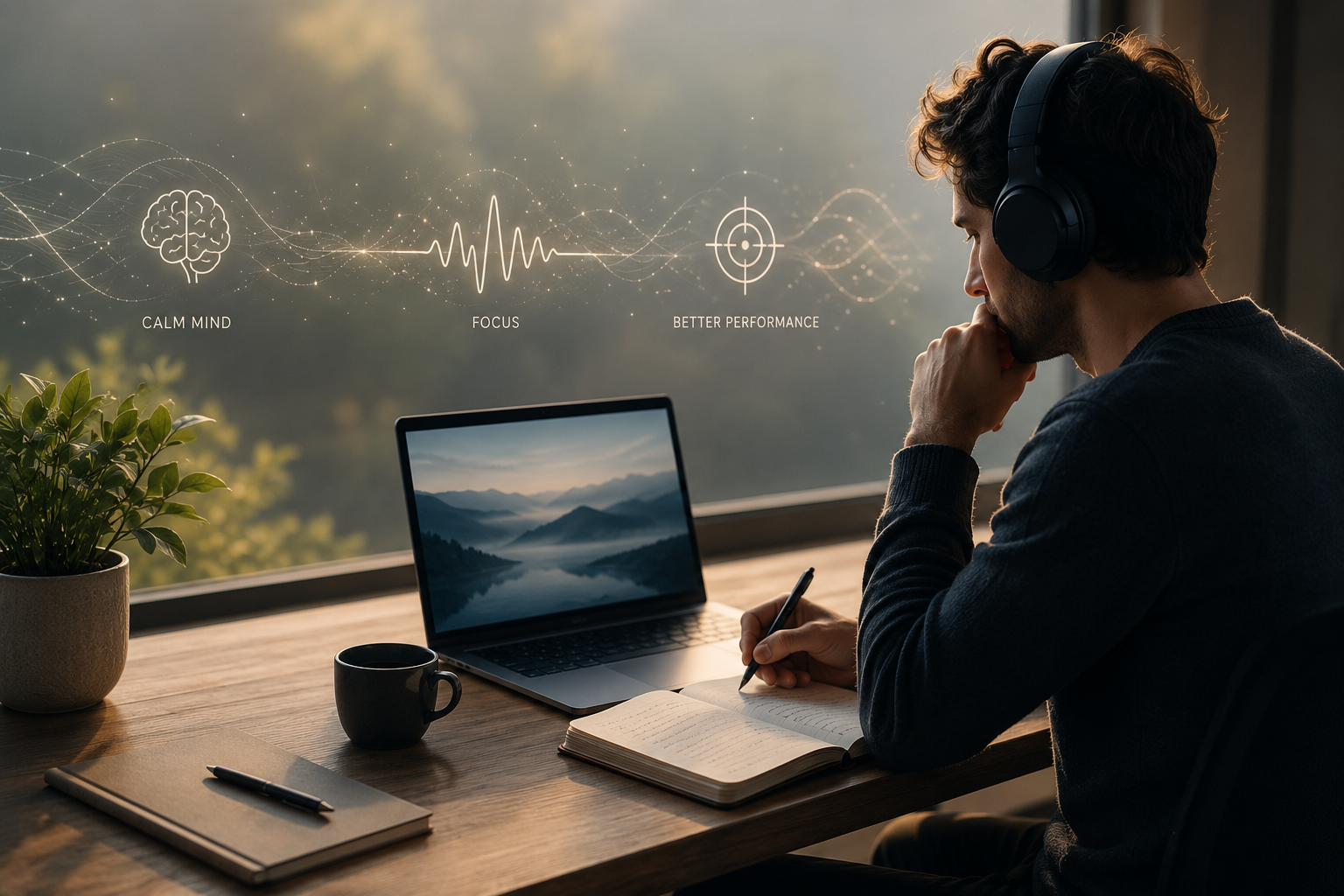
Whether you’re working, studying, writing or simply trying to stay focused, you’ve probably wondered whether music can help you concentrate. Some people find that a carefully chosen playlist helps them settle into a productive rhythm, while others prefer complete silence.
The truth is more interesting than either extreme.
Research suggests that music can improve concentration for some people in some situations, but the effect depends on several factors. The type of music, the task you’re performing, your personality and even your familiarity with the music can all influence whether it becomes a helpful companion or an unwanted distraction.
Understanding how music affects your attention can help you make better choices about what you listen to when focus matters most.
How Your Brain Responds to Music
Music engages multiple areas of your brain at the same time. Rather than being processed in a single location, it activates regions involved in hearing, memory, emotion, movement and attention.
This widespread activity explains why music can change how you feel within moments. A gentle piece of music may slow your breathing and encourage relaxation, while an energetic rhythm might increase alertness and motivation.
When you’re concentrating, your brain is constantly deciding which information deserves attention and which should be ignored. Music becomes part of that environment.
If the music supports your mental state without demanding your attention, it can make sustained focus feel easier. If it competes with the task you’re trying to complete, it may reduce your performance instead.
This balance is one reason why there is no universal answer to whether music improves concentration.
What Scientific Research Suggests
Studies investigating music and concentration have produced mixed results, but several consistent themes have emerged.
Research indicates that background music may improve mood, reduce feelings of stress and make repetitive tasks feel more enjoyable. Since stress and anxiety often interfere with concentration, creating a calmer emotional state can indirectly support better focus.
However, studies also show that music containing lyrics often competes with language processing in the brain. If you’re reading, writing or studying complex material, songs with vocals may make it more difficult to retain information or maintain attention.
Instrumental music generally causes fewer interruptions because your brain isn’t simultaneously trying to process words.
Research has also highlighted something known as the arousal and mood hypothesis. This proposes that music may improve performance because it places you in an emotional state that’s well suited to the task you’re performing, rather than directly making you more intelligent or productive.
In other words, the right music may help you feel motivated, calm or engaged, allowing you to work more effectively.
Does Ambient Music Improve Focus?
Ambient music has become increasingly popular among students, programmers, writers and people working from home.
Unlike many musical styles, ambient music is often designed to create atmosphere rather than demand attention. Long evolving textures, gentle harmonies and gradual changes encourage a sense of continuity instead of constantly drawing your focus towards individual melodies or lyrics.
This aligns with what many researchers believe creates effective background music.
Music that is predictable, relatively slow and free from sudden changes appears less likely to interrupt concentration. Instead of competing for your attention, it can become part of the environment.
That doesn’t mean all ambient music works equally well.
Highly experimental pieces or tracks with unexpected sounds may still capture your attention. The most effective focus music tends to provide interest without becoming the main event.
Many people also find that nature-inspired ambient music, including rain, flowing water or subtle environmental recordings, creates a calming atmosphere that makes sustained work feel less mentally demanding.
Why Familiar Music Often Works Better
One surprising finding is that familiar music may sometimes support concentration better than unfamiliar music.
When you already know a piece well, your brain has fewer surprises to process. You’re less likely to stop and wonder where the music is going because you’ve heard it many times before.
By contrast, new music naturally attracts more attention as your brain tries to predict melodies, rhythms and changes.
This doesn’t mean you should never discover new artists while working. It simply suggests that deep listening and focused work are often better treated as separate activities.
If your goal is concentration, returning to trusted instrumental albums or playlists may provide a more stable background.
Personality Makes a Difference
People experience music differently.
Some individuals thrive in complete silence and find any background sound distracting. Others become restless without a gentle layer of sound surrounding them.
Psychologists have suggested that personality traits, including whether someone is naturally more introverted or extroverted, may influence these preferences. Individual sensitivity to sound also varies considerably.
Your working environment matters too.
A quiet room at home presents different challenges from a busy café or an open-plan office. In noisy surroundings, carefully chosen music played through headphones may actually reduce distractions by masking unpredictable conversations and environmental sounds.
Rather than searching for a universal rule, it’s often more helpful to observe how different types of music affect your own ability to concentrate.
Choosing Music That Supports Focus
If you’re looking for music to help you concentrate, a few simple guidelines are supported by both research and practical experience.
You may find it helpful to:
- Choose instrumental music when reading or writing.
- Keep the volume low enough that it fades into the background.
- Avoid songs that trigger strong emotional memories when you’re trying to focus.
- Select music with a relatively consistent tempo.
- Use familiar playlists for demanding mental work.
- Experiment with ambient music, gentle electronic soundscapes or recordings of natural environments.
The best music for concentration is often the music you stop noticing after a few minutes. It becomes part of the atmosphere rather than another task for your brain to process.
Finding Your Own Soundtrack for Concentration
Research doesn’t support the idea that one style of music magically improves everyone’s concentration.
Instead, it suggests something more encouraging. Your ideal listening environment is personal.
The right music can reduce stress, improve your mood and create a more pleasant space in which to work. For many people, especially during repetitive or creative tasks, this combination makes sustained concentration easier.
If you’re curious, try experimenting with different types of instrumental music. Notice how your attention changes, how easily ideas flow and whether certain sounds help you settle into a state where time seems to pass unnoticed.
At Sonic Oneness, this philosophy shapes every composition. Rather than demanding your attention, the music is created to accompany moments of quiet focus, creativity, meditation and reflection. Whether you’re writing, studying, relaxing or simply taking a pause from a busy day, the aim is to provide an atmosphere that supports your own experience, allowing your thoughts to unfold naturally while the music gently occupies the space around you.
References
Kiss, L. & Linnell, K. J. (2024). The role of mood and arousal in the effect of background music on attentional state and performance during a sustained attention task. Scientific Reports, 14, 9485.
Orpella, J. et al. (2025). Effects of music advertised to support focus on mood and processing speed. PLOS ONE.
Lehmann, J. A. M. & Seufert, T. (2017). The Influence of Background Music on Learning in the Light of Different Theoretical Perspectives and the Role of Working Memory Capacity. Frontiers in Psychology.
Ikegami, S. et al. (2025). What Makes Effective Background Music for Concentration? The Impact of Lyrics and Music Familiarity on Cognitive Tasks.
Ho, H. Y. & Loo, F. Y. (2023). A theoretical paradigm proposal of music arousal and emotional valence interrelations with tempo, preference, familiarity, and presence of lyrics. New Ideas in Psychology.
Looking for some background music for working? Try the Sonic Oneness Chill Playlist.