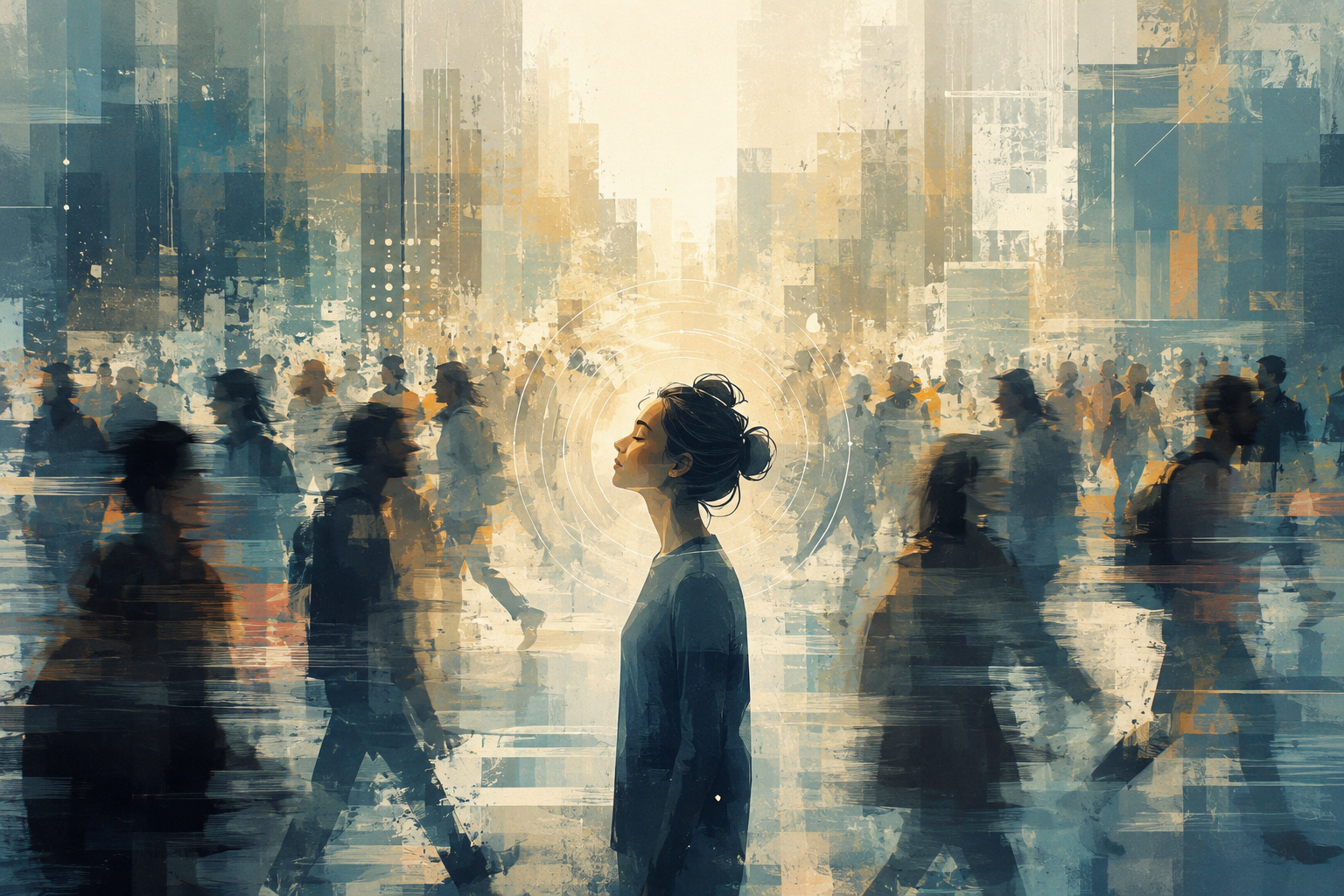
You only have to look at the world around you to see how divided people can become.
Political beliefs, religion, nationality, culture and social differences can create boundaries between us. Even within families and friendships, disagreements can sometimes become more important than the things we share.
Yet there is something curious about music.
You can hear a song in a language you don’t understand and still feel something. You can listen to music created hundreds or thousands of miles away and recognise an emotion that feels strangely familiar.
So, can music really bring people together in a divided world?
Perhaps it cannot solve our differences. But it can remind you that beneath those differences, you are sharing something with other human beings.
Music speaks before words
Words can be complicated.
They carry meanings, cultural references, political associations and personal interpretations. The same sentence can mean very different things to different people.
Music can work differently.
Rhythm, melody, harmony, dynamics and tone can communicate emotion without requiring you to understand a particular language. A piece of music can make you feel peaceful, excited, melancholic or joyful without explaining exactly why.
This is one reason music can cross cultural boundaries so easily.
You don’t necessarily need to know where a piece of music came from to respond to it. You don’t need to understand its lyrics to recognise sadness in a voice or energy in a rhythm.
In that sense, music offers a form of communication that can exist before language.
It doesn’t remove the differences between people. It simply gives you another way of experiencing something together.
The shared experience of listening
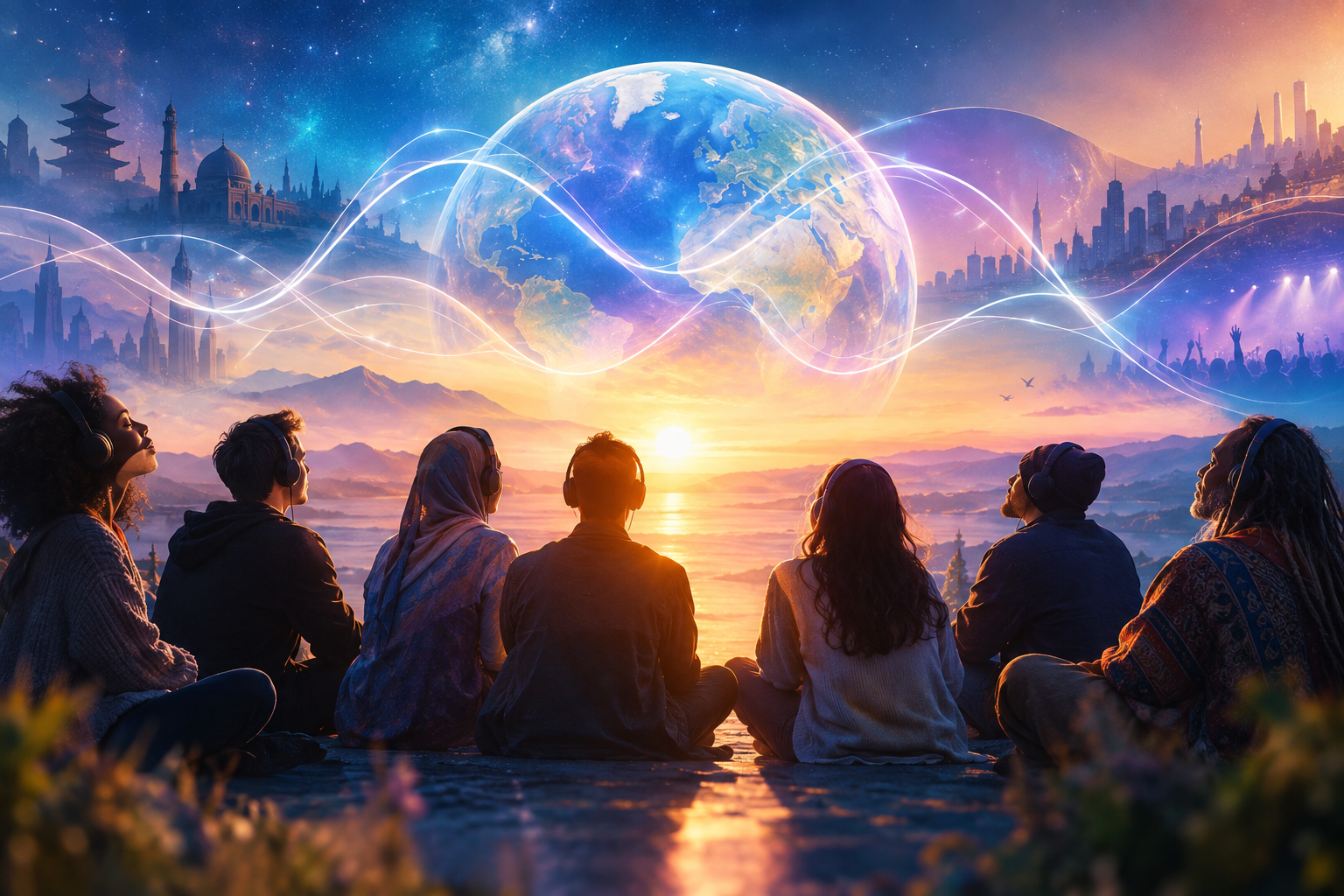
There is something quite powerful about listening to music with other people.
Think about a concert. Thousands of individuals arrive with completely different lives, opinions and experiences. For a few hours, they may stand together, listen together, sing together and move to the same rhythm.
You don’t necessarily know the person standing beside you.
You might disagree with them about almost everything.
But at that particular moment, you are sharing the same experience.
The same thing can happen on a much smaller scale. A group of friends listening to an album, parents singing with their children, people dancing at a festival or a community gathering around live music can all experience a temporary sense of connection.
Music gives you something outside yourself to focus on.
For a while, the boundaries between “me” and “you” can become a little less important.
Music can connect cultures
Music has always travelled.
Long before streaming services and social media, musical ideas moved between communities through migration, trade, travel and cultural exchange.
Instruments, rhythms and musical traditions have crossed geographical boundaries for centuries, sometimes becoming something completely new when they meet another culture.
You can hear this in countless forms of contemporary music.
Electronic music itself is an interesting example. A producer working in one part of the world can create a piece of music using sounds and technologies developed elsewhere, influenced by musical traditions from several different cultures, and then share it with listeners everywhere.
The finished piece may belong to no single place.
It becomes part of a shared musical language.
This doesn’t mean cultural differences should disappear. Quite the opposite. Music can provide a way for you to encounter something unfamiliar without necessarily needing to reduce it to something you already understand.
You can simply listen.
Dancing together can change the atmosphere
There is another side to music that is even more physical.
Rhythm invites movement.
When people dance together, their movements can become synchronised. Everyone doesn’t have to move in exactly the same way, but there is a shared pulse underneath the experience.
You can see this at concerts, festivals, clubs and celebrations around the world.
For a while, people aren’t primarily thinking about their differences. They are responding to the same beat.
There is something wonderfully simple about that.
A rhythm doesn’t ask who you voted for, what you believe, where you were born or how much money you have.
It simply gives you something to move with.
Music can create belonging
Perhaps one of the most important things music can provide is a sense of belonging.
You may have experienced this yourself when discovering an artist or a particular style of music that seems to express something you have struggled to put into words.
Suddenly, you realise that someone else has felt something similar.
That can be surprisingly comforting.
Music can also create communities around shared interests. People gather around particular artists, genres, instruments and musical traditions. These communities can give you a sense that you are not experiencing life entirely on your own.
This is particularly meaningful when you feel isolated.
A song cannot necessarily replace human companionship. But it can remind you of your connection with other people, even when you are physically alone.
Sometimes a three-minute song can say, in its own strange way:
“You’re not the only one who feels this.”
But music cannot magically remove division
It would be tempting to say that music can unite everyone.
Reality is rather more complicated.
Music can bring people together, but it can also be used to reinforce identity and division. Songs can become associated with political movements, nationalism, religion or conflict. Different groups can use music to strengthen their sense of belonging to one side and separation from another.
Music itself isn’t automatically peaceful.
It is a tool of human expression, and humans can use that expression in many different ways.
Even a song intended to bring people together might mean completely different things to different listeners.
That’s worth remembering.
If you expect music to solve the world’s divisions, you will probably be disappointed. But if you see music as one small way of creating moments of connection, its possibilities become much more interesting.
What happens when you listen together?
Perhaps the deeper question isn’t whether music can unite the entire world.
Perhaps it’s whether music can change the way you experience another person.
Imagine sitting quietly with someone and listening to the same piece of music.
You don’t need to agree on politics.
You don’t need to share the same beliefs.
You don’t even need to talk.
For several minutes, you are simply experiencing the same sound.
That shared experience can be surprisingly intimate.
And perhaps this is where music has something important to teach you about connection.
You don’t have to be identical to someone to share something with them.
You can remain completely yourself while still participating in something larger than yourself.
Music, silence and the experience of oneness
There is an interesting connection here with the idea of oneness.
In many spiritual traditions, oneness refers to the underlying interconnectedness of existence. The idea appears in different forms across philosophies and spiritual practices, including Advaita Vedanta.
Music can provide a small, experiential glimpse of something similar.
When you become completely absorbed in listening, the usual stream of thoughts can become quieter. You may stop analysing the music and simply experience it.
For a moment, there is less separation between you and what you are hearing.
And when you listen with another person, there is a shared experience within that same moment.
You are still two individuals.
But you are participating in one experience.
Perhaps that is one of the simplest ways music can remind you of connection.
Not by telling you that everyone is the same, but by allowing you to experience something together.
Could music help create a less divided world?
Music alone won’t end conflict.
It won’t resolve political disagreements, remove inequality or make every culture understand every other culture.
Those problems require human action, difficult conversations and meaningful changes in the way people treat one another.
But music can create the conditions for connection.
It can give people something to share.
It can help you encounter unfamiliar cultures. It can give you a sense of belonging. It can provide comfort when you feel alone. It can bring strangers together in a room and allow people to experience the same moment.
And perhaps that matters more than it first appears.
A divided world isn’t only created by enormous conflicts between nations or communities. Division can also exist in everyday life — in loneliness, mistrust, resentment and the assumption that people who are different from you cannot possibly understand you.
Music can challenge that assumption.
You may hear a voice from another country singing about love, loss, hope or loneliness and realise that the emotion isn’t particularly foreign at all.
You already know it.
You are human.
Listening for what we share
Perhaps you don’t need music to make everyone agree.
Perhaps you only need it to help you listen.
Listen to another culture.
Listen to another person’s experience.
Listen to a song you don’t immediately understand.
Listen to someone whose life is completely different from your own.
And sometimes, simply listen without trying to add anything at all.
In a noisy and divided world, that act of listening can be surprisingly meaningful.
Music reminds you that connection doesn’t always begin with agreement. Sometimes it begins with shared experience.
A rhythm can be shared.
A melody can be shared.
A moment of silence can be shared.
And perhaps, somewhere between the first note and the last, you can remember that beneath all the labels we place upon ourselves and one another, you are listening to the same human world.
Music may not be able to bring the whole world together.
But every time it helps two people feel a little less separate, something has changed.
Recommended listening